Search This Blog

Showing posts with label REFORMER. Show all posts

Monday, 7 November 2011

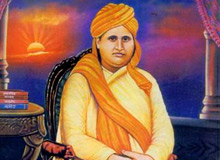
Swami Dayanand Saraswati

Swami Dayanand Saraswati


Born: 12, February, 1824
Died: 31, October, 1883

Achievements
Dayanand Saraswati was a reformer and believed in pragmatism. He preached against many rituals of the Hindu religion such as idol-worship, caste by birth, animal sacrifices and restrictions of women from reading Vedas. He was not only a great scholar and philosopher but also a social reformer and a political thinker. Dayanand Saraswati was responsible for the revival of the Indian educational system by bringing together pupil from different strata of the society under one umbrella, that is, classroom.

Early Life

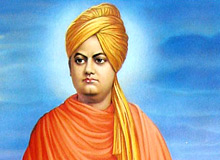
Swami Vivekananda

Swami Vivekananda

Born: 12 January, 1863 

Died: 4 July, 1902

Contributions
Swami Vivekananda is known for his inspiring speech at the Parliament of the World's Religions at Chicago on 11 September, 1893, where he introduced Hindu philosophy to the west. But this was not the only contribution of the saint. He revealed the true foundations of India's unity as a nation. He taught how a nation with such a vast diversity can be bound together by a feeling of humanity and brother-hood. Vivekananda emphasized the points of drawbacks of western culture and the contribution of India to overcome those. Freedom fighter Netaji Subhash Chandra Bose once said: "Swamiji harmonized the East and the West, religion and science,Past And Present. And that is why he is

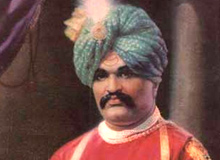
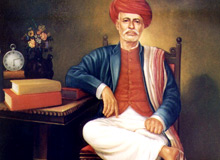
Shahu Chhatrapati

Shahu Chhatrapati
Born: 26 July, 1874

Passed Away: 6 May, 1922


Contributions

King Shahu Chhatrapati was considered as a true Democrat and social reformer. He was an invaluable gem in the history of Kolhapur. Shahu was associated with many progressive activities in the society including education for women. He was greatly influenced by the contributions of social reformer Jyotiba Phule. Primary education to all regardless of caste and creed was one of the significant moves of the King. 


Life

Shahu Chhatrapati was the King of Kolhapur. He was the son of Sambhaji and grandson of Shivaji, the great. Shahu was a staunch follower of Mahatma Jyotiba Phule and Shahu devoted his life for the upliftment of the society. He emphasized on the development and welfare of the lower-castes. He always used to contemplate over some serious issues of the

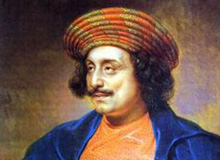
Raja Ram Mohan Roy

Raja Ram Mohan Roy
Born: August 14, 1774

Died: September 27, 1833


Achievements

Raja Ram Mohan Roy is considered as the pioneer of modern Indian Renaissance for the remarkable reforms he brought in the 18th century India. Among his efforts, the abolition of the sati-pratha-a practice in which the widow was compelled to sacrifice herself on the funeral pyre of her husband-was the prominent. His efforts were also instrumental in eradicating the purdah system and child marriage. In 1828, Ram Mohan Roy formed the Brahmo Samaj, a group of people, who had no faith in idol-worship and were against the caste restrictions. The title 'Raja' was awarded to him by Mughal emperor Akbar, the second in 1831 when Roy visited England as an ambassador of the King to ensure that Bentick's regulation of banning the practice of Sati was not overturned. 

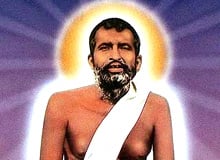
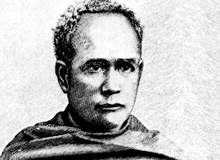
Sri Ramakrishna Paramhansa

Sri Ramakrishna Paramhansa

Born: February 18, 1836
Passed Away: 16, August, 1886 

Contributions
Sri Ramakrishna Paramhansa was a popular saint of India. He had a strong faith in the existence of god. He regarded every woman of the society, including his wife, Sarada, as holy mother. Swami Vivekananda was one of the prominent disciples of Ramakrishna, who later formed the Ramakrishna Mission. 

Life
The original name of Ramakrishna Paramhansa was Gadadhar Chattopadhyay. He was born into a poor and orthodox Brahmin family on 18 February, 1836 in Kamarpukur, Hooghly district of West Bengal. His parents were Khudiram Chattopadhyaya, and Chandramani Devi. 

Sunday, 6 November 2011

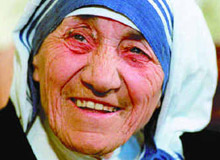
Mother Teresa


Mother TeresaBorn: August 26, 1910
Passed Away: 5 September, 1997

Contributions
Mother Teresa was a true follower of humanity. Many people considered Mother as the "reincarnated form of Lord Jesus". Mother Teresa devoted her entire life in serving the needy and abandoned people of the society. Although her mission started in India, she succeeded in bringing the people of all societiesunder one roof, i.e. humanity. Besides the Nobel Peace Prize, she was also awarded with Ramon Magsaysay and Padmashri Award for her social works.

Life
The original name of Mother Teresa was Agnes Gonxha Bojaxhiu. She was born in Skopje, the capital of Macedonia,

Jyotiba Phule

Jyotiba Phule
Born: 11 April, 1827 

Passed Away: 28 November, 1890


Contributions 

Jyotiba Phule was one of the prominent social reformers of the nineteenth century India. He led the movement against the prevailing caste-restrictions in India. He revolted against the domination of the Brahmins and for the rights of peasants and other low-caste fellow. Jyotiba Phule was believed to be the first Hindu to start an orphanage for the unfortunate children.


Life

Jyotirao Phule was born in Satara district of Maharastra in 1827. His father, Govindrao was a vegetable-vendor at Poona. Originally Jyotirao's family belonged to 'mali' caste, considered as inferior by the Brahmins. Since, Jyotirao's father and uncles served as florists, the family came to be known as `Phule'. Jyotirao's mother passed away when he was nine months old.

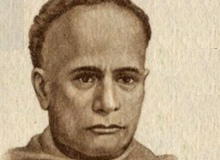
Ishwar Chandra Vidyasagar

Ishwar Chandra Vidyasagar
Born: 26 September, 1820

Died: 29 July, 1890


Contributions

Ishwar Chandra Vidyasagar is considered as one of the pillars of Bengal renaissance. In other words, he managed to continue the reforms movement that was started by Raja Rammohan Roy. Vidyasagar was a well-known writer, intellectual and above all a staunch follower of humanity. He brought a revolution in the education system of Bengal. In his book, "Barno-Porichoy" (Introduction to the letter), Vidyasagar refined the Bengali language and made it accessible to the common strata of the society. The title 'Vidyasagar' (ocean of knowledge) was given to him due to his vast knowledge in almost all the subjects. Poet Michael Madhusudan Dutta while writing about Ishwar Chandra said: "The genius and wisdom of an ancient sage, the energy of an Englishman and the heart of a Bengali mother".


Life & Education

Ishwar Chandra Bandopadhyaya, was born in Birsingha village of Midnapore district, West Bengal. His father Thakurdas Bandyopadhyay and mother Bhagavati Devi were very religious persons. Their economic condition was not that stable and subsequently the childhood days of Vidyasagar were spent in abject poverty. After the completion of elementary education at the village school, his father took him to Calcutta (Kolkata). It is believed that Ishwar Chandra Vidyasagar learned English numbers by following the mile-stones labels on his way to Calcutta at the age of eight years. 

Ishwar Chandra was a brilliant student. His quest for knowledge was so intense that he used to study on street light as it was not possible for him to afford a gas lamp at home. He cleared all the examinations with excellence and in quick succession. He was rewarded with a number of scholarships for his academic performance. To support himself and the family Ishwar Chandra also took a part-time job of teaching at Jorashanko. 

In the year 1839, Ishwar Chandra Vidyasagar successfully cleared his Law examination. In 1841, at the age of twenty one years, Ishwar Chandra joined the Fort William College as a head of the Sanskrit department.

After five years, in 1946, Vidyasagar left Fort William College and join the Sanskrit College as 'Assistant Secretary'. In the first year of service, Ishwar Chandra recommended a number of changes to the existing education system. This report resulted into a serious altercation between Ishwar Chandra and College Secretary Rasomoy Dutta. Following this, Vidyasagar resigned from Sanskrit College and rejoined Fort William College but as a head clerk.


A kind-hearted Ishwar

Ishwar Chandra VidyasagarIshwar Chandra Vidyasagar would start crying in distress whenever he saw poor and weak people lying on the footpath and street. He used to spend a part of his scholarships and salary for the welfare of those poor people. He would also buy medicine for the sick. 


Reforms

Ishwar Chandra Vidyasagar initiated the concept of widow remarriage and raised concern for the abolition of child-marriage and polygamy. He also opened the doors of the colleges and other educational institutions to lower caste students, which was earlier reserved only for the Brahmins. For his immense generosity and kind-heartedness, people started addressing him as "Dayar Sagar" (ocean of kindness). 


Nawab's shoe donation

One day, Ishwar Chandra Vidyasagar and his few friends decided to collect donations to form Calcutta University. He traveled across Bengal and neighboring states asking people to donate for the foundation. While doing so, one day he reached outside the palace of an influential King. After hearing his plea the King, pulled one of his shoes and dropped into Vidyasagar's bag as donation. Vidyasagar thanked Nawab and left.

The very next day Vidyasagar organized an auction of the Nawab's shoe and earned Rs. 1000. The Nawab after hearing that his shoe has fetched so much amount of money, he himself gave a similar amount of money as donation. 


Death

Ishwar Chandra Vidyasagar, the great scholar, academician and reformer passed away on 29 July, 1891 at the age of 70 years. After his death Rabindranath Tagore said, "One wonders how God, in the process of producing forty million Bengalis, produced a man!"
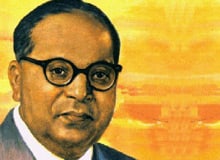
Dr. B. R. Ambedkar

Dr. B. R. Ambedkar
Born: 14 April, 1891 

Passed Away: 6, December, 1956


Contribution

Dr B R Ambedkar, popularly known as Babasaheb Ambedkar, was one of the architects of the Indian Constitution. He was a well-known politician and an eminent jurist. Ambedkar's efforts to eradicate the social evils like untouchablity and caste restrictions were remarkable. The leader, throughout his life, fought for the rights of the dalits and other socially backward classes. Ambedkar was appointed as the nation's first Law Minister in the Cabinet of Jawaharlal Nehru. He was posthumously awarded the Bharat Ratna, India's highest civilian honor in 1990. 


His Life

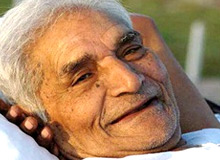
Baba Amte

Baba Amte
Born: December 26, 1914

Passed Away: February 9, 2008


Contributions

From a child born with a silver spoon in his mouth, Baba Amte later transformed his life into a social activist. He devoted his entire life to serve the downtrodden people of the society. He left his lucrative profession to join India's struggle for independence. Baba Amte formed Anandvan (Forest of Joy), to serve the people struck by leprosy. He received many awards including the Ramon Magsaysay Award.


Life

Muralidhar Devdas Amte, popularly known as Baba Amte, was born on 26 December, 1914 in Hinganghat, Wardha district in Maharashtra. He was the eldest son of his parents. His father was a wealthy Brahmin landowner of Wardha

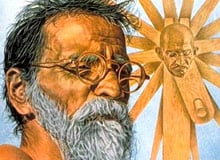
Acharya Vinoba Bhave

Acharya Vinoba Bhave

Born: 11 September, 1895 

Died: 15 November, 1982

Contributions
Acharya Vinoba Bhave was a freedom fighter and a spiritual teacher. He is best known as the founder of the 'Bhoodan Movement' (Gift of the Land). The reformer had an intense concern for the deprived masses. Vinoba Bhave had once said, "All revolutions are spiritual at the source. All my activities have the sole purpose of achieving a union of hearts." In 1958, Vinoba was the first recipient of the international Ramon Magsaysay Award for Community Leadership. He was also conferred with the Bharat Ratna (India's highest civilian awards) posthumously in 1983.
Related Posts Plugin for WordPress, Blogger...