Search This Blog

Wednesday, 2 November 2011

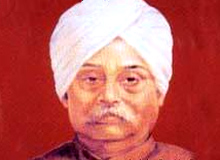
Lala Lajpat Rai

Lala Lajpat RaiBorn: January 28, 1865
Died: October 30, 1928

Contributions
Lala Lajpat Rai immensely contributed in attaining independence the nation. He helped in establishing few schools in the country. He also initiated the foundation of Punjab National Bank. In 1897, he founded the Hindu Orphan Relief Movement to keep the Christian missions from securing custody of these children. He died after the police lathi-charged on the activists, protesting the arrival of Simon Commission.

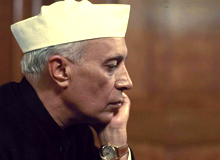
Jawaharlal Nehru

Jawaharlal Nehru Born: 14 November 1889
Passed Away: 27 May 1964

Contributions
Jawaharlal Nehru was the first Prime Minister of independent India. He was a member the Congress Party that led the freedom movement against British Empire. Nehru was one of the architects who had the opportunity to steer the newly freed-nation. He was also the chief framer of domestic and international policies between 1947 and 1964. It was under Nehru's supervision that India launched its first Five-Year Plan in 1951. Nehru's predominant roles in substantiating India's role in the foundation of institutions like NAM had surprised the then stalwarts of international politics. He advocated the policy of Non-Alignment during the cold war and India, subsequently, kept itself aloof from being in the process of "global bifurcation".

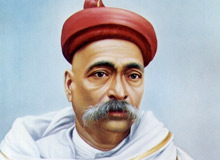
Bal Gangadhar Tilak

Bal Gangadhar TilakBorn: 23 July 1856
Passed Away: 1 August 1920

Contributions
Bal Gangadhar Tilak was a social reformer and freedom fighter. He was one of the prime architects of modern India and strongest advocates of Swaraj (Self Rule). He was universally recognized as the "Father of Indian Movement". Tilak was a brilliant politician as well as a profound scholar who believed that independence is the foremost necessity for the well being of a nation.

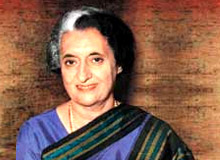
Indira Gandhi

Indira GandhiBorn: 19 November 1917
Passed Away: 31 October 1984

Contributions
Indira Gandhi was, undoubtedly, one of the greatest political leaders of India. She was the first and only woman to be elected as the Prime Minister. She is also regarded as the most controversial political leader of the country for her unprecedented decision of imposing "a state of emergency". She was also criticized for carrying out the Operation Blue-Star in Punjab that eventually scripted her assassination on 31 October 1984.

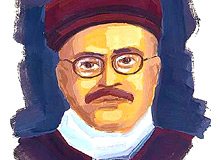
Gopal Krishna Gokhale

Gopal Krishna GokhaleBorn: May 9, 1866
February: 19, 1915

Contributions
Gopal Krishna Gokhale was one of the pioneers of the Indian Independence Movement. Gokhale was a senior leader of the Indian National Congress. He was one of the most learned men in the country, a leader of social and political reformists and one of the earliest and founding leaders of the Indian Independence Movement. Being one of the first generations of Indians to receive college education, Gokhale was respected widely in the Indian intellectual community.

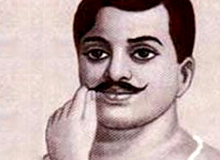
Chandrasekhar Azad

Chandrashekhar AzadBorn: July 23, 1906
Passed Away: February 27, 1931

Contributions
A contemporary of Bhagat Singh, Chandrasekhar Azad was a born firebrand revolutionary. He engaged in a heroic battle against the British. His role was crucial in inspiring the others of his generation to participate in the national movement for freedom.

Life
Chandrasekhar Azad was born to Pandit Sita Ram Tiwari and Jagrani Devi on July 23, 1906 in Badarka (Unnao). His original name was Chandrasekhar Tiwari.

Bhagat Singh

Bhagat Singh an anodyne makes you feel good 
Born: September 27, 1907
Passed Away: March 23, 1931

Contributions
Bhagat Singh was among the prominent revolutionaries who shaped the base of a grand national movement. Following his execution, on March 23, 1931, the supporters and followers of Bhagat Singh regarded him as a "Shaheed", "martyr".

Life
Bhagat Singh was born on 27 September 1907 at Banga in Lyallpur district (now Pakistan) to Kishan Singh
Related Posts Plugin for WordPress, Blogger...